Imagine opening Google, typing in your question, and instead of the familiar list of blue links, you’re served an AI-generated answer that sums everything up for you. Sounds futuristic? Well, it’s already here—and it’s called Google AI Mode. But before we celebrate, let’s pause and ask: is this a revolution, or a looming threat to everyone who depends on organic traffic?
In this article, we’ll break down what Google AI Mode is, how it works, who has access, and what it means for content creators, businesses, and agencies. Spoiler: there’s a lot at stake.
What is Google AI Mode?
AI Mode is a new search experience inside Google, currently in experimental phase via Search Labs, and available only to Google One AI Premium subscribers. It functions as a parallel “tab” to traditional Google Search, offering AI-generated responses based on real-time data, web content, Google’s Knowledge Graph, and even Google Shopping.
In short: it’s a search engine that thinks. And responds. With text, links, images, opinions, and interactivity.
How It Works: More Than Summaries
Unlike traditional Featured Snippets or AI Overviews you might have seen, AI Mode is a fully AI-powered interface. When you click the tab, you’re greeted with a summary generated by a customized version of the Gemini 2.0 model. It has advanced reasoning capabilities, supports multimodal inputs (text, voice, image), and retains context across follow-up questions.
Another unique aspect is its use of the “query fan-out” technique. Instead of a single search, Google fires off multiple subqueries in parallel, aggregates the results, and delivers a synthetic, deeper summary of the topic.
And What About Links? Do They Still Exist?
Yes, but with caveats. Google says links to third-party content are still shown, especially when user intent involves clear actions—like making a purchase, booking, or downloading something. In such cases, links are displayed “prominently.”
However, if the search is purely informational—say, understanding a concept—AI Mode might simply give you the answer, with no extra click needed. And that’s exactly where the problem lies for publishers.
The Publishers’ Dilemma (And Rightfully So)
Since the early days of Snippets, many content producers have seen Google as a “click-eating machine.” With AI Mode, that fear intensifies: if the answer is clear, complete, and visually appealing, why would a user bother clicking a link?
The impact could be brutal:
- Less organic traffic
- Lower time on site
- Reduced conversions
- Decreased ad revenue
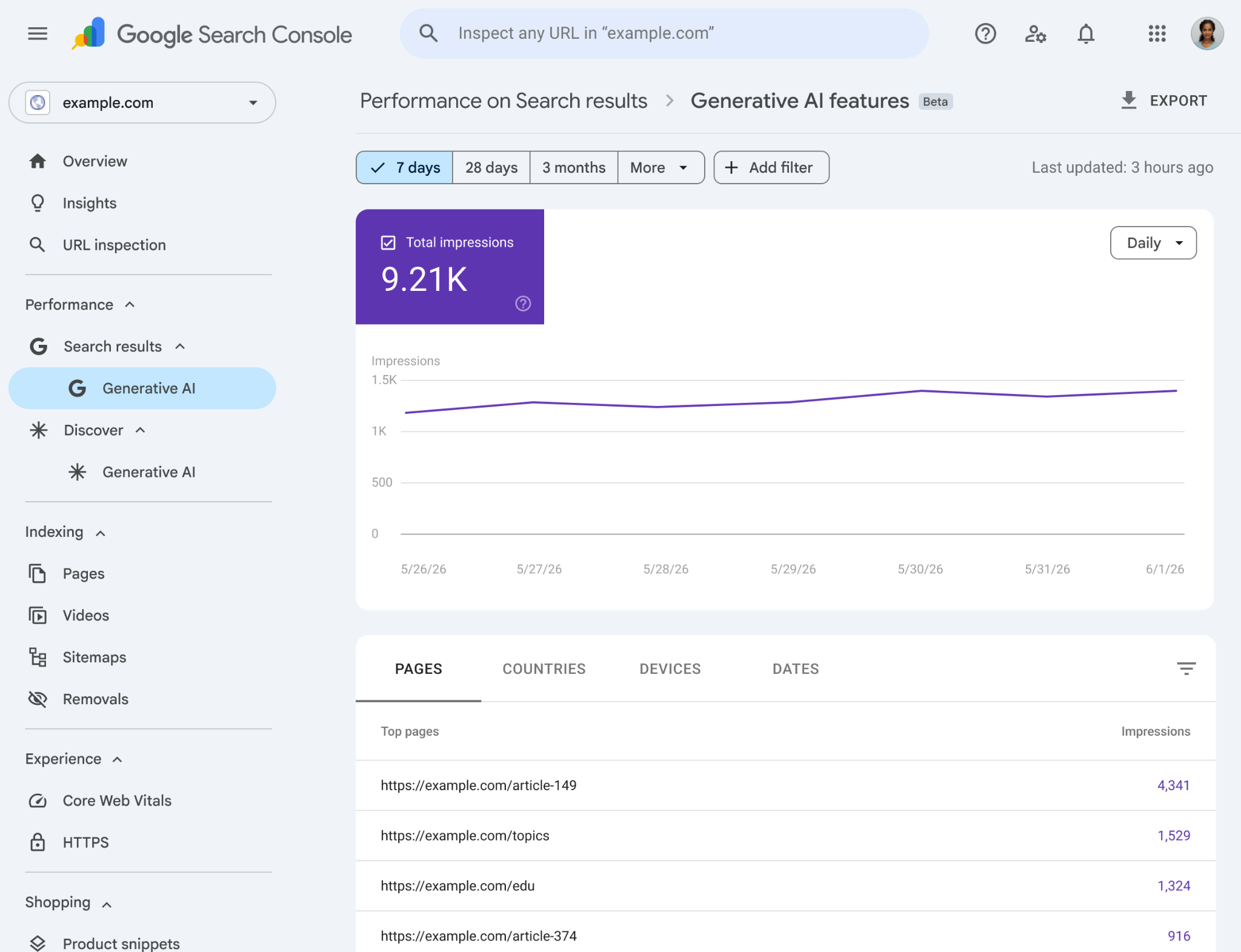
Worse still, there’s currently no way to segment this data in Google Search Console. That means there’s no way to know how much traffic (or lack thereof) comes from AI Mode.
Quality, Safety & (Lots of) Testing
Google insists AI Mode is experimental, with a strong focus on quality and safety. They’ve acknowledged challenges such as:
- False or biased responses
- Out-of-context humor or sarcasm
- Misinformation propagation
- Incorrect multimodal answers
Still, history tells us these experiments often go live before they’re fully mature.
How to Access AI Mode (If You’re Curious)
Access is currently limited:
- You need to be a Google One AI Premium subscriber
- You must activate Search Labs and be approved into the experiment
- Once approved, go to google.com/mode or tap the “AI Mode” tab during a search
What Does This Mean for Your Content Strategy?
Now is the time to critically assess your digital presence:
- Is your content still focused only on ranking?
- Are you offering something that can’t be easily summarized?
- Is your writing valuable enough to earn the click?
The AI era demands content with depth, perspective, and a unique voice. It’s not just about informing—it’s about provoking, engaging, and driving action.
Conclusion: A Promising or Dystopian Future?
Google AI Mode is undeniably a technological leap. But it’s also a red flag for anyone relying on traditional organic traffic.
Yes, there’s still time to adapt. But the window is closing fast. This is the moment to rethink formats, real value delivery, and connection strategies that go beyond the click.
What about you? Have you thought about how your digital strategy will survive this new era of search?
Drop your thoughts in the comments. Let’s keep this conversation going—because the future of the web is being written right now, and we need to be part of the script.