
On August 4, OpenAI flipped the switch that much of the market of marketing was both hoping for and fearing at the same time: ChatGPT has started showing ads to users in Brazil. This isn’t a small test—like a secondary market to calibrate the product before moving on to the big ones. Brazil is among the first eight countries in the world to receive the feature, and the explanation is straightforward: we’re one of the top three ChatGPT markets in the world for weekly active users, alongside the United States and India.
For the last few years, here at Superplural, I’ve been answering the same question from clients in different ways: “does this change the media strategy?” With Google, with Meta, with TikTok, the answer was almost always yes—but slowly. With this OpenAI announcement, the answer is yes, and fast. I’m going to explain what has actually changed, why it’s happening now, and what it means for digital marketing practitioners in Brazil from today onward.
What OpenAI announced, exactly
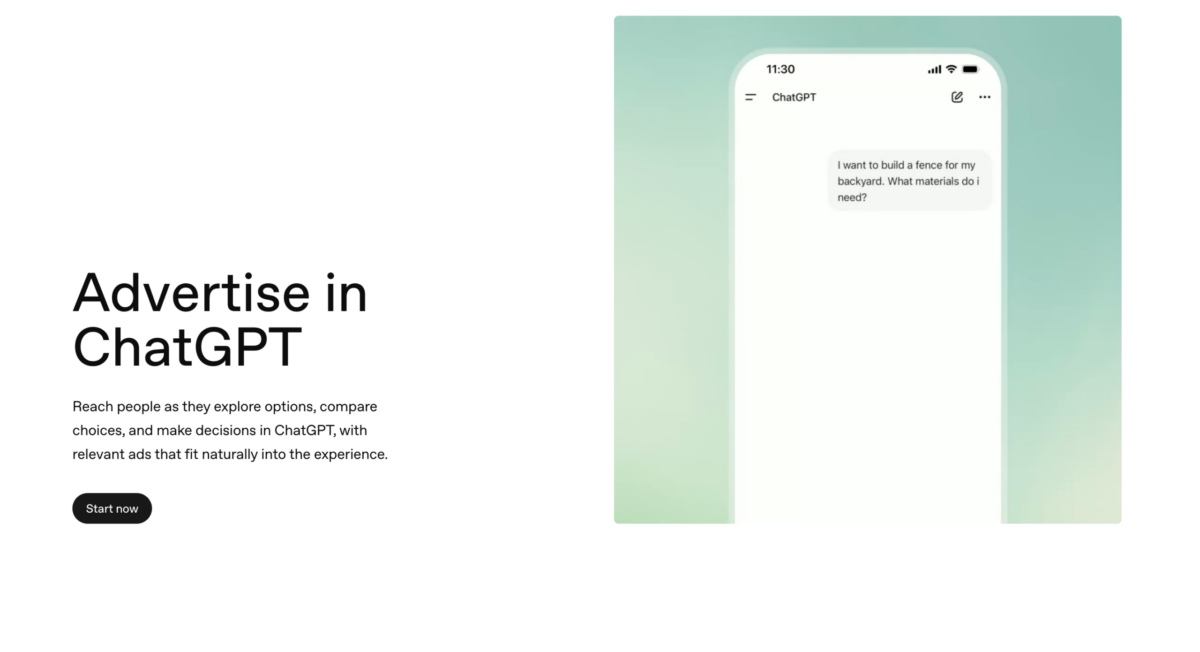
The pilot started gradually, not for all users at the same time. Ads appear below ChatGPT’s responses, clearly identified as sponsored content, visually separated from what the model generated. OpenAI was explicit on one point: the ad doesn’t interfere with the response itself—it comes afterward, as a separate element.
Who sees the ads: users older than 18 on the Free and Go plans. Who doesn’t: subscribers to the paid plans, Plus, Pro, Business, Enterprise, and Education. It’s the same model used by Spotify, YouTube, and practically every subscription service for years: people who pay don’t see ads. The difference is that this model has now arrived inside the tool that has become the main entry point for information for a growing slice of the internet.
- Ad appears below the response, never inside it
- Clear labeling as sponsored content
- Only users of the free plans (Free and Go), over 18
- Paid subscribers continue to have no ads at all
Why Brazil, why now
The short answer is math. ChatGPT has more than 900 million active users per week worldwide, and fewer than 3% of them pay for any subscription. That puts OpenAI in a position similar to any giant social network: a product used by nearly a billion people, financially supported by a small fraction of them. Advertising stops being an option and becomes a structural necessity.
And the financial pressure is real. According to CNN Brasil, OpenAI makes today around US$ 25 billion on an annualized basis, but projects losses between US$ 14 and 30 billion just in 2026, depending on the accounting criterion used. Training and running frontier models is expensive, and subscriptions alone don’t balance the books.
| Metric | Number |
|---|---|
| ChatGPT weekly active users (global) | +900 million |
| Share that pays for a subscription | less than 3% |
| Annualized pilot revenue in the US (6 weeks) | US$ 100 million |
| Advertisers participating in the US pilot | +600 |
| Projected ad revenue for 2026 | US$ 2.5 billion |
| Projected ad revenue up to 2030 | US$ 100 billion |
| Brazil’s position in the global rollout | 8th country, behind the US, Canada, the UK, Australia, New Zealand, Japan, and South Korea |
The US pilot, which began in January, has already validated the thesis: US$ 100 million in annualized revenue in just six weeks, with more than 600 advertisers participating, according to data published by Exame. With its user volume, Brazil is a natural candidate to repeat that result.
How the format works in practice
According to TecMundo, ads appear in the middle of interactions, when the user is talking about products, trips, or other topics with clear commercial intent. OpenAI guarantees that the advertiser never receives the conversation content, the chat history, what is stored in the user’s memory, or identifiable personal information (name, email, IP address, location). What reaches the advertiser is aggregated metrics: views and clicks—the basics of any paid media platform.
One detail that matters directly to people who work with media: the pilot was already built with major agency groups involved from the start, including BETC Havas, Monks, Omnicom, Publicis Groupe, and WPP. In other words, the giant advertising holding companies have been testing this inventory for months, while the rest of the Brazilian market is only now discovering that this channel exists.
How to control ad personalization in ChatGPT
Before talking strategy, here’s a practical aside. Even on the free plan, you can reduce how much the ads use your history to segment you, without needing to subscribe to a paid plan. The path, according to the ALM Corp overview of OpenAI’s ad controls, is as follows:
- Go to your ChatGPT account settings
In the app or the web version, enter the account settings area.
- Find the section for ad or data controls
This is where the toggles related to ad personalization are located.
- Turn off the main personalization
This prevents the system from using your ad history and interests profile to segment what appears.
- Also turn off personalization based on conversations
A second control prevents topics from earlier conversations from influencing the ads you see.
- Clear the ad history and interests profile
In the history and interests tabs, you can delete specific entries or clear everything at once.
Worth reinforcing: none of these controls removes ads from the free plan—they only reduce targeting. The only way to use ChatGPT with no ads at all is to subscribe to a paid plan.
What this changes for Brazilian digital marketing
This is where the part I care about most comes in, and where I disagree with those treating it as “just another paid media channel.” Google historically works by keyword: you type what you want, and the system matches intent with ads. Social media works by interruption: you weren’t looking for anything, and the feed offers you something based on demographic and behavioral data. ChatGPT is a new format because the person is in the middle of a real conversation, with accumulated context, discussing a question, a problem, a purchase decision being formed. It’s the richest intent signal that any media channel has ever had access to, because it isn’t a single isolated word—it’s an entire line of reasoning being formed in real time.
This changes the question every brand needs to ask itself. It’s no longer only “am I well positioned on Google for that keyword?”—it’s “when someone asks ChatGPT about my industry, does my product appear in the response, even if they don’t pay anything for it?” I’ve written about this in detail in the post about GEO, the SEO for a world where nobody clicks the link anymore: the competition for visibility has shifted from “being on the first page” to “being the source the AI cites or recommends.” Now, with ads inside the chat itself, that competition gets a second layer—paid—on top of the organic layer. Anyone who doesn’t even know whether they show up organically will be competing at a double disadvantage. If you haven’t checked this yet, the practical guide on how to monitor whether your brand is cited by ChatGPT and other AIs is the first step before thinking about any paid budget here.
There’s also a broader reading to this, one I draw from French philosopher Guy Debord and the concept of the society of the spectacle: the idea that, in advanced capitalism, every direct human relationship tends to be mediated by an image, a commodity, a consumption. ChatGPT was born with the opposite promise—a direct assistant, with no commercial noise, without mediating by whoever pays more to appear first. The ad inside the conversation is exactly that mechanism walking in through the missing door. This isn’t moralizing criticism; it’s a structural reading: every mass digital product, sooner or later, converts the attention it has accumulated into media inventory. ChatGPT only took less time than Google and Facebook to reach that point.
Is it hype or is it serious?
I don’t like selling clients every new channel as if it were a mandatory revolution, and this won’t be any different. The pilot is still gradual—today not every Free and Go user sees ads—and OpenAI has been clear that it will adjust the format as feedback comes in. There isn’t yet a mature self-service buying dashboard for the average Brazilian advertiser, which today limits access mainly to large brands and the agency holding companies that are already inside the global pilot.
But the underlying signal is serious, and here it is: ChatGPT stopped being only a productivity tool and became, definitively, a media platform. This changes budgets, changes the type of professional an agency needs on its team, and changes the success bar for people who measure results only by clicks on traditional ads. The question that remains for any brand isn’t whether it’s worth testing—it’s when to start testing before the CPM rises as competition enters.
The pilot began on August 4, 2026. Brazil is the eighth country to receive the feature, after the United States, Canada, the United Kingdom, Australia, New Zealand, Japan, and South Korea.
Users over 18 on the free plans Free and Go. Subscribers to the Plus, Pro, Business, Enterprise, and Education plans see no ads at all.
Not completely on the free plan. You can reduce personalization by turning off ad controls in account settings, but the ads themselves only go away by subscribing to a paid plan.
No. OpenAI states that advertisers never receive the content of conversations, chat history, memory data, or identifiable personal information. They receive only aggregated metrics, such as views and clicks.
The projection is US$ 2.5 billion in ad revenue in 2026, reaching US$ 100 billion by 2030, according to data released by the company.
We’ll be closely following how this format evolves in Brazil in the coming weeks, including testing it in practice as soon as access opens up beyond the big holding companies. If you want to understand where your brand stands today in this new kind of visibility, before thinking about any paid budget inside ChatGPT, reach out to us to talk.